

Indoor hydroponics,choose CheerBio

Exploring Modern Agriculture: Unveiling the Secrets of Hydroponic Vegetables
Published time:
2024/05/29
Nowadays, health has become the most precious asset in people's lives, and healthy living has become a new buzzword. People are starting to pay attention to the importance of exercise and fitness, focusing on healthy food combinations in their daily diets, especially in terms of food choices, opting for hydroponic vegetables. All of this shows the pursuit and yearning of young people for a healthy lifestyle.
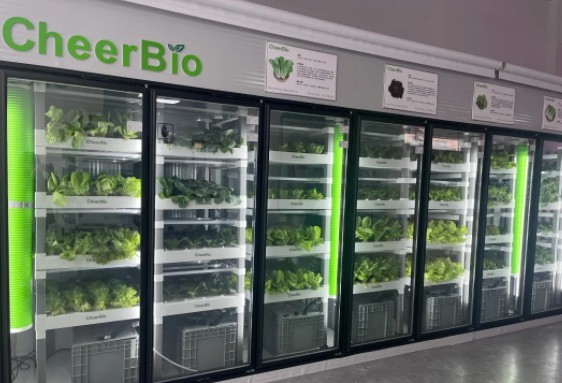
But why have hydroponic vegetables become a "healthy living" food choice among young people? Let's delve into modern agriculture and explore the secrets of hydroponic vegetables.
Hydroponic vegetables, as the name suggests, are vegetables grown in water. Compared to traditional soil cultivation, hydroponic vegetables avoid heavy metal pollution and pest infestations, thus ensuring the safety of the vegetables. In a modern plant factory environment, hydroponic vegetables receive sufficient nutrients and water, resulting in faster growth and more stable quality.
For those unfamiliar with hydroponic vegetables, there may be concerns about their taste. However, there's no need for such worries. Due to the unique growing environment of hydroponic vegetables, their taste is indeed different from soil-grown vegetables.
In fact, hydroponic vegetables have a more balanced supply of water and nutrients, resulting in lower fiber and lignin content, while the content of vitamin C and other nutrients is significantly higher. Therefore, they taste crisper and fresher, with less fiber, making them ideal for making salads or eating raw.
Take tomatoes as an example. Hydroponic tomatoes have a uniform appearance and color, and a suitable taste. Experiments have shown that the vitamin C content of hydroponic tomatoes is as high as 154.9 mg/kg, while the vitamin C content of soil-grown tomatoes is only 124.2 mg/kg. This means that the vitamin C content of hydroponic tomatoes is nearly 20% higher than that of soil-grown tomatoes!
Similarly, hydroponic cucumbers, sweet peppers, and other fruits and vegetables have similar advantages. They are not only visually appealing but also taste delicious and have higher nutritional value.
For fitness and weight-loss enthusiasts who pursue a healthy lifestyle, hydroponic vegetables are an excellent choice. Because hydroponic vegetables are low in fiber and have a crisp and refreshing taste, they are easily digested and absorbed by the body. At the same time, hydroponic vegetables are rich in vitamin C and other nutrients, which can meet the body's nutritional needs.
During weight loss, choosing hydroponic vegetables as part of your daily diet can not only provide sufficient nutritional support but also help reduce calorie intake and promote overall health.
However, different people have different preferences. Some people are used to soil-grown vegetables and don't like the crisper and fresher taste of hydroponic vegetables. This is not a problem for CheerBio—an indoor IoT hydroponic planting expert. To make it convenient for every urban family to enjoy fresh, healthy, and delicious vegetables at home, CheerBio has launched the PlantBlock home IoT hydroponic planter + PlantMaster APP.

Through one-click APP control of PlantBlock for hydroponic planting, even beginners can easily become planting masters. The PlantBlock home IoT hydroponic planter can customize planting plans according to personal preferences and precisely control nutrient supply according to different vegetable types and growth stages.
For example, if you prefer less water, shorten the water supply time 48 hours before harvesting to create some stress on the roots; and increase the lighting time with a special spectrum.
Custom-made hydroponic vegetables, which may sound "unbelievable," have been realized by CheerBio. For those who pursue healthy eating, owning this is equivalent to having their own urban vegetable garden.
Related news







CheerBio technology (Nantong) Co., Ltd.
Address: No. 172, Pujiang Road, Haimen Street, Haimen District, Nantong City

WeChat Official Account

WeChat Customer Service